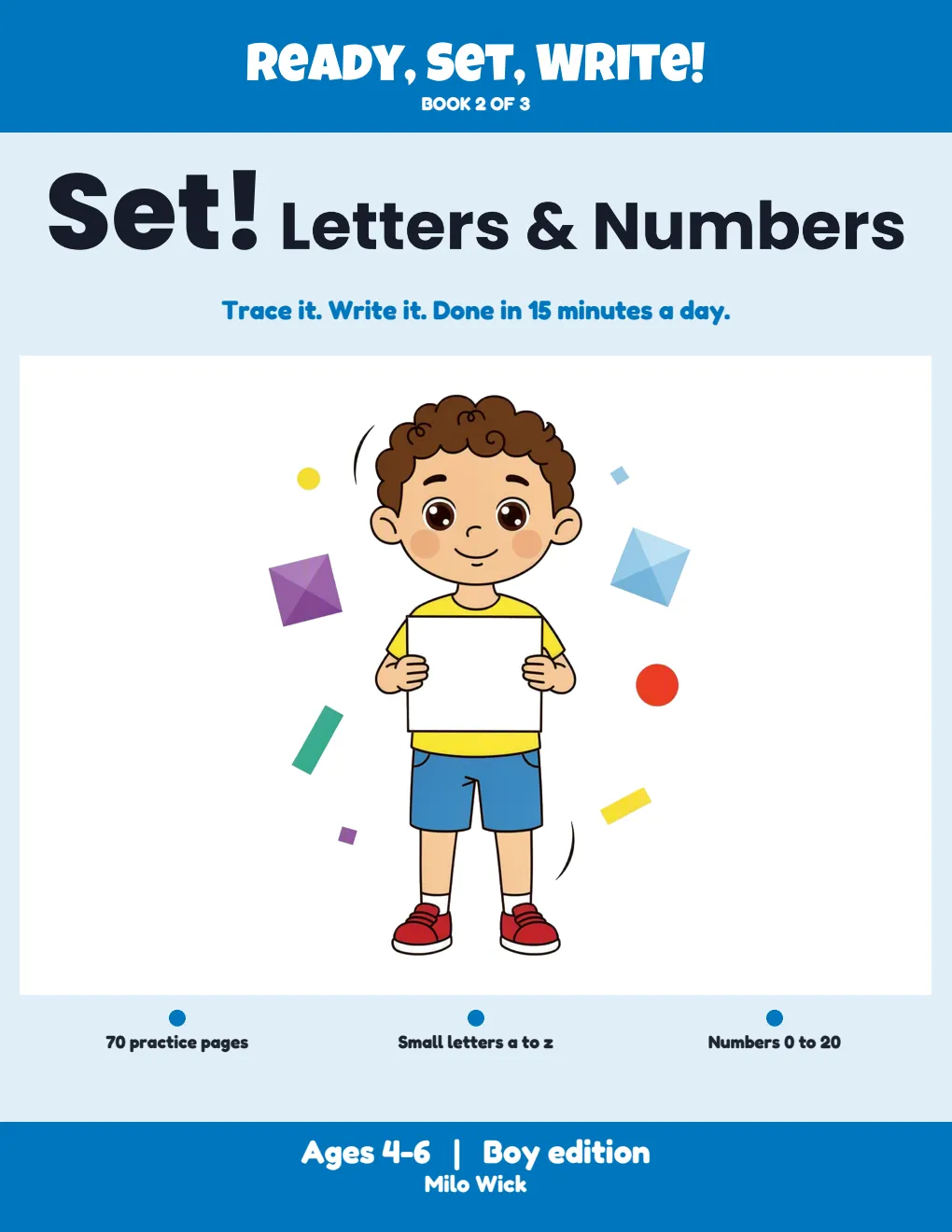
Book 2 of 3 in Ready, Set, Write!
Set! Letters & Numbers
Your child knows the capital letters. Now meet their small partners, then count and write the numbers 0 to 20. Every number comes with something to count, so writing practice and early maths grow together.
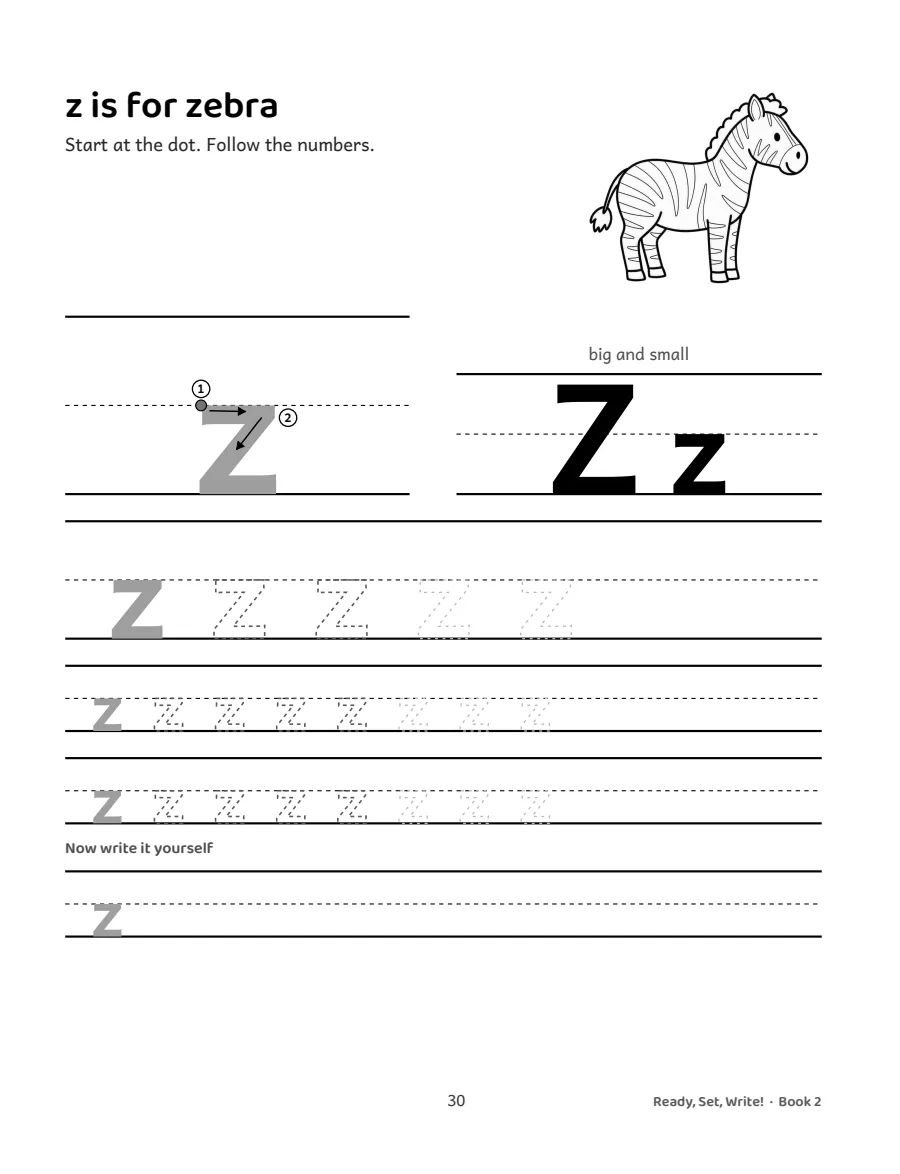
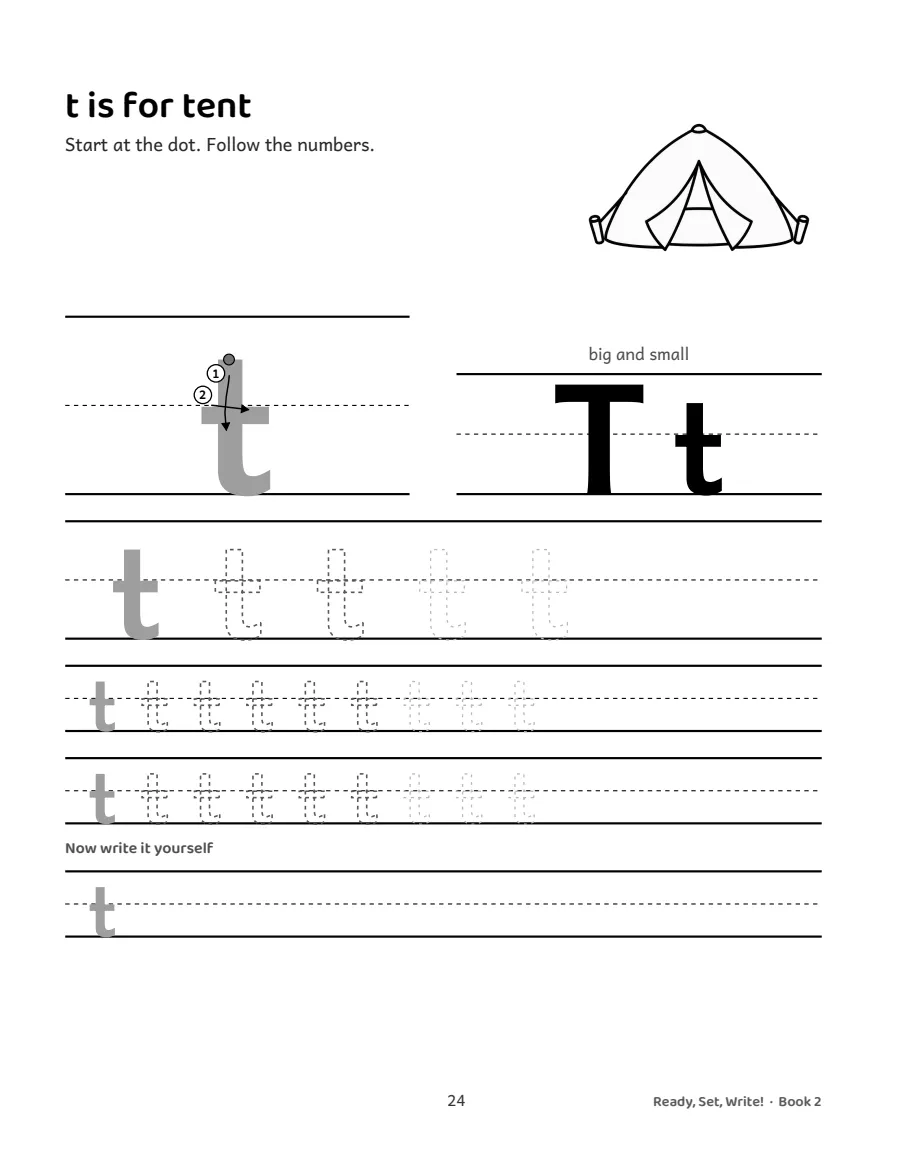
Small letters are harder than capitals and most books rush them. Half of them sit inside the dashed midline, four of them drop below the baseline, and b, d, p and q are the same shape turned four ways. So each one gets a page, in an order that keeps the confusing pairs apart.
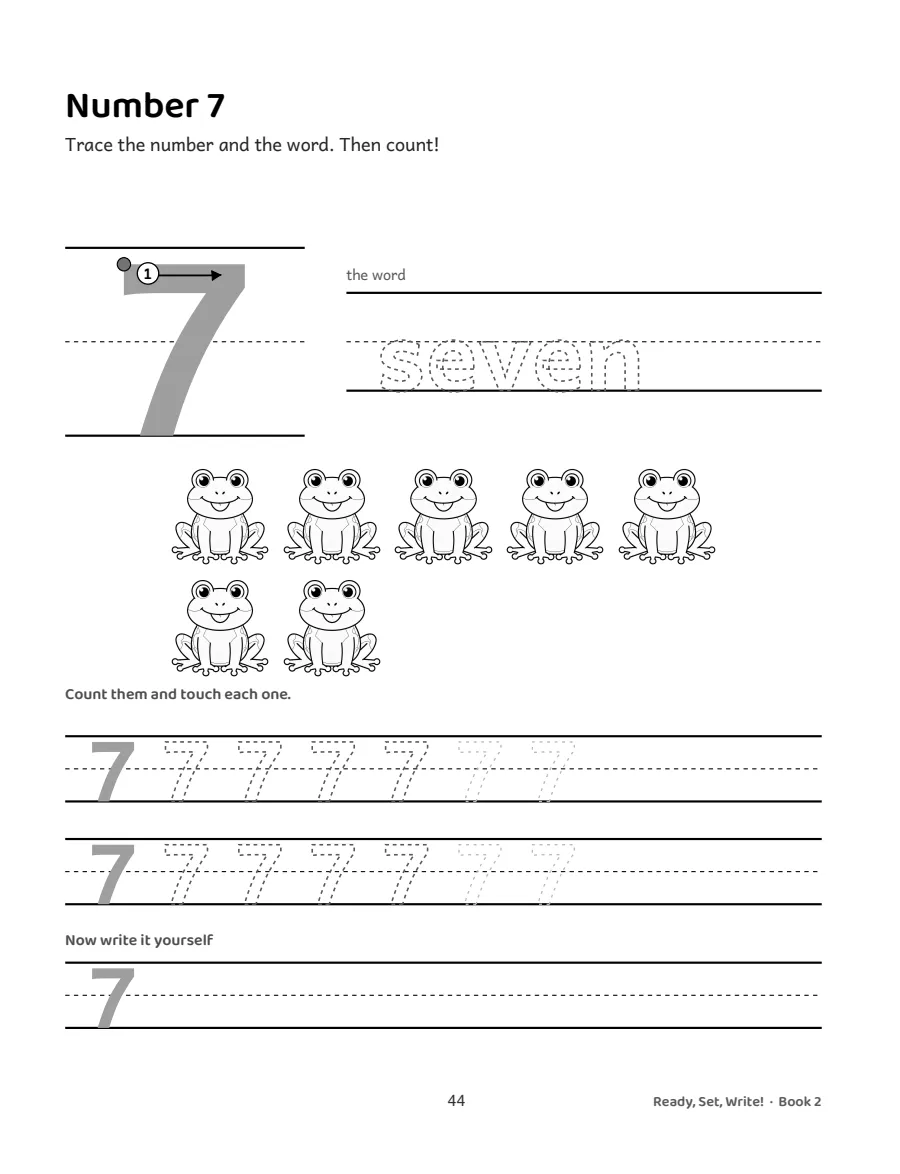
The numbers run alongside rather than after. A child writing 7 next to seven things to count is doing two different jobs at once, and the second one is why the first one matters.
What is inside
- A page for every small letter, a to z
- Numbers 0 to 20 with objects to count
- Matching and counting review pages
- Five free practice pages and a certificate
Pages from the book
Two editions
Books 1 and 2 come in two editions. They teach exactly the same thing; only the child in the pictures changes. Book 3 has one edition with both children in it.